Folklore has long used pigs to mirror human behavior, blending humor with insight. Today, pig-centered jokes are refreshed with wordplay and satire, proving that old tales can still comment on modern habits, flaws, and contradictions.
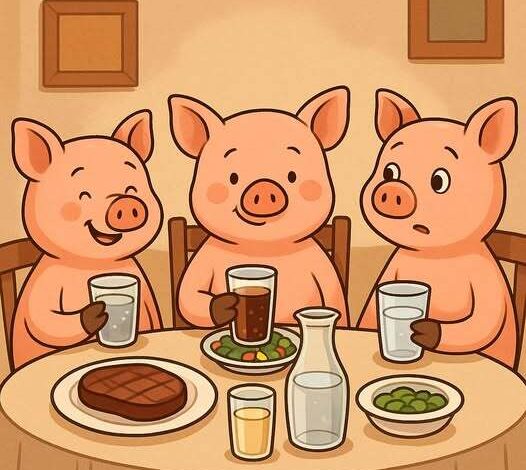
In one retelling, the Three Little Pigs become restaurant diners. Two order soda and cola, while the third obsessively asks for water. Their choices exaggerate personality differences, turning a familiar fairy tale into a playful glimpse of indulgence and oddity. The punchline twists a childhood rhyme into literal logic: the pig drinks endless water because he must “wee-wee-wee all the way home.” Humor emerges from reinterpreting innocence into unexpected necessity.
Another story uses satire to spotlight human absurdity. A farmer struggles to feed his pigs, punished whether he gives too little, too much, or too extravagantly. His final solution—handing the pigs money to make their own choices—exposes the contradictions in rules and expectations.
Both tales entertain while gently mocking the inconsistencies of daily life. By combining humor, wordplay, and moral reflection, these modern pig stories show that folklore remains relevant, offering laughter alongside insight into human nature.