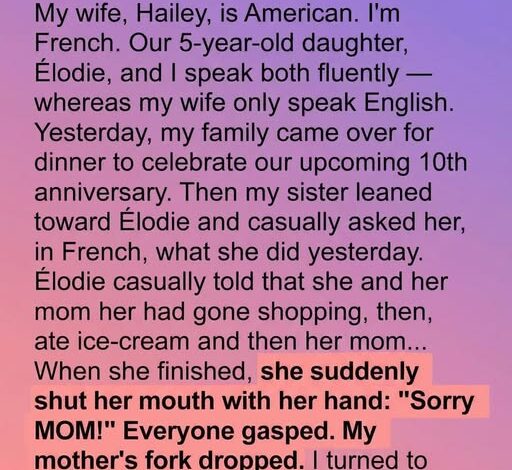
The evening began like so many joyful family gatherings before it—laughter around the table, overlapping conversations, and the easy comfort of celebrating something meaningful together. With a milestone anniversary approaching, the mood was relaxed and affectionate. Stories flowed freely, shifting between French and English as naturally as the family itself. For the parents, watching their young daughter move effortlessly between both languages was a quiet point of pride, a reflection of the life they were building across cultures.
Midway through dinner, someone asked the child a simple question in French about her day. She answered happily, describing ordinary moments—shopping together, sharing a treat, spending time side by side. Her voice was carefree and unguarded, the way only a child’s can be. Smiles circled the table as everyone listened, charmed by her innocent storytelling.
Then, unexpectedly, she stopped mid-sentence and covered her mouth. She apologized quickly and earnestly. The room fell silent—not because anything inappropriate had been said, but because her reaction carried a deeper weight. In that small gesture, the adults sensed a quiet realization: that language can include or exclude, and that she cared deeply about making sure everyone felt part of the conversation.
What followed wasn’t confusion, but understanding. Glances were exchanged as the family recognized the empathy behind her instinct. No one had prompted her, yet she had tried to protect her mother from feeling left out. The conversation resumed gently, with translations, laughter, and reassurance. Long after the table was cleared, that brief pause lingered—a reminder that communication isn’t just about words, but about care, awareness, and the simple ways we learn to look out for one another.